

Plant Profile
Monkey Jar
a.k.a. Monkey Cups //Tropical Pitcher Plant // Nepenthes
The Monkey Jar is a truly unusual and eye-catching houseplant that is sure to make a great conversation piece. They are fun plants to look after and fascinating to watch work.
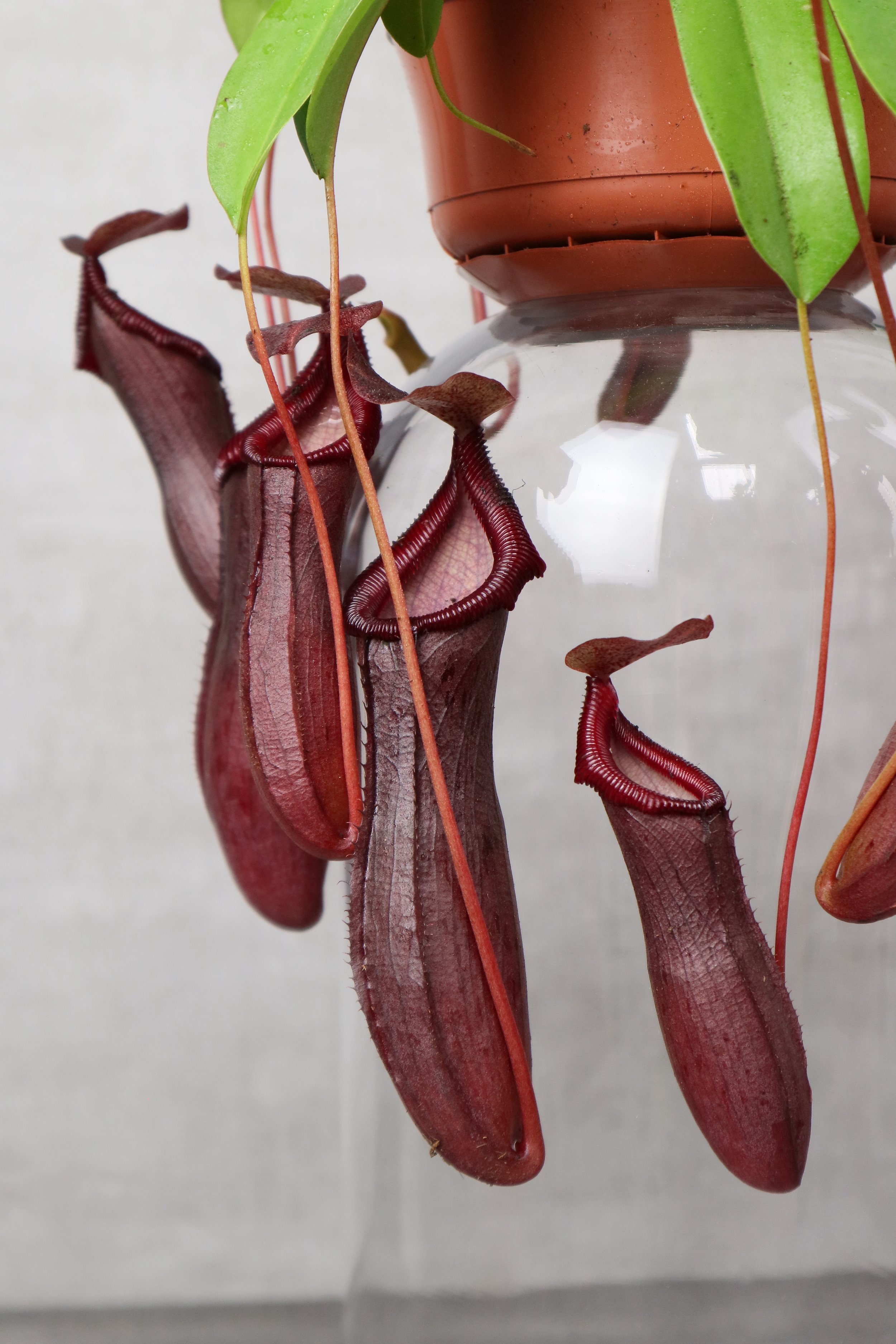
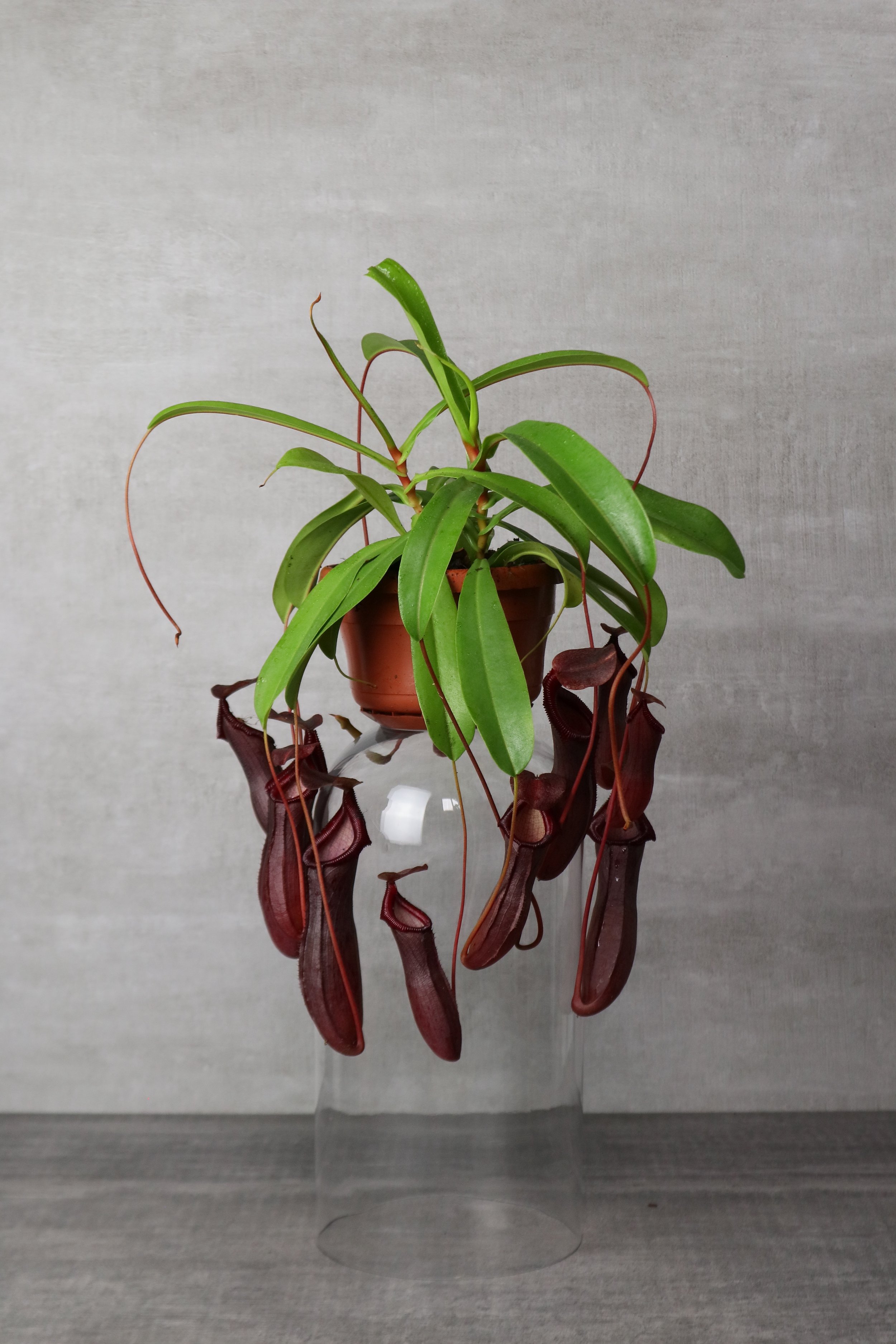
Most commonly found in the tropical areas of South East Asia, the Monkey Jar grows ‘pitchers’ which are basically a swelling of their leaves’ mid-veins. The plant has received its unusual nicknames due to the fact that in its natural habitat monkeys occasionally drink the liquid that can be found in these ‘pitchers’. They are carnivorous plants attracting insects into its ‘pitcher’ traps, which is how the plant receives the majority of its nutrients.
Top Tips
✔ Older leaves tend to turn yellow, when this happens remove the leaves with a sharp pair of scissors in order to keep the plant looking healthy.
✔ The Monkey Jar is sensitive to chemicals so it is best to avoid using tap water to water the plant, instead use distilled or purified water.
✔ If the Monkey Jar isn’t feeding as normal, as it is being grown in a position where it can’t naturally catch insects, it will appreciate a few recently dead insects being placed into its pitchers.
Plant Care
-
The lighting needs of a Monkey Jar plant varies from bright, direct light to dappled light, depending on the variety. If unsure of the variety, it is best to position the plant in a spot where it will receive moderately bright light.
-
The soil of the Monkey Jar should always be kept moist. Do not allow the soil to dry out between waterings and also make sure that the plant is never left to sit in water as it is susceptible to rot.
-
Although the Monkey Jar can tolerate lower humidity levels, the plant thrives when in higher humidity and therefore regular misting is recommended.
-
Fertiliser doesn’t need to be used for the Monkey Jar as in the wild it survives on the small amount of nutrients it receives from the few insects it digests every month. If the Monkey Jar isn’t feeding as normal, as it is being grown in a position where it can’t naturally catch insects, it will appreciate a few recently dead insects being placed into its pitchers.
-
Ideal temperatures for optimum growth are between 18-27°C. Lower than this will slow plant development. When your plant is growing well, it may need some extra support with a moss pole or bamboo stake.
-
This plant is non-toxic
-
The easiest way to propagate a Monkey Jar plant is through cuttings. For best results take the cuttings from the parent plant during the active growing period, the cutting can then either be planted in sphagnum moss or placed in distilled water to grow roots. If planting in sphagnum moss, keep the planting container in a plastic bag in order to increase humidity levels. After a couple of months the cuttings will begin to root and after around 6 months should begin to grow pitchers. Once the plant is showing signs of growing, repot it in a larger pot using a regular potting mixture and gradually introduce the plant to lower humidity levels.
-
The Monkey Jar will, on average, need to be repotted every year or every other year. The plant will need to be repotted when the soil is beginning to break down, the plant becomes dry or if the plant begins to show signs of being root bound. As usual, it is best to repot the plant in the early spring when the growing period is beginning.



Quick Plant check up
Not producing pitchers
This will be due to the plant not receiving sufficient light and the humidity levels being too low. Ensure your plant is receiving lots of bright light and mist the plant regularly to boost humidity.
Floppy leaves
This will be the result of the plant not receiving enough light. Look at moving the plant so it is in a position to receive bright light.
Pitchers dropping off
If the plant’s pitchers drop suddenly this is a sign that the plant is dehydrated and in desperate need of a good drink.
Grow your plant gang

a.k.a Lepismium bolivianum // Pfeiffera boliviana // Forest Cactus
Native to the tropical forests of Bolivia, the Lepismium Bolivianum is a great choice for a low maintenance trailing plant. Position in a spot with bright, indirect light and allow to dry out at least 80% before watering again. With adequate light Forest cacti can produce a small white flower.