

Plant Profile
Peace Lily
a.k.a. Spathiphyllum
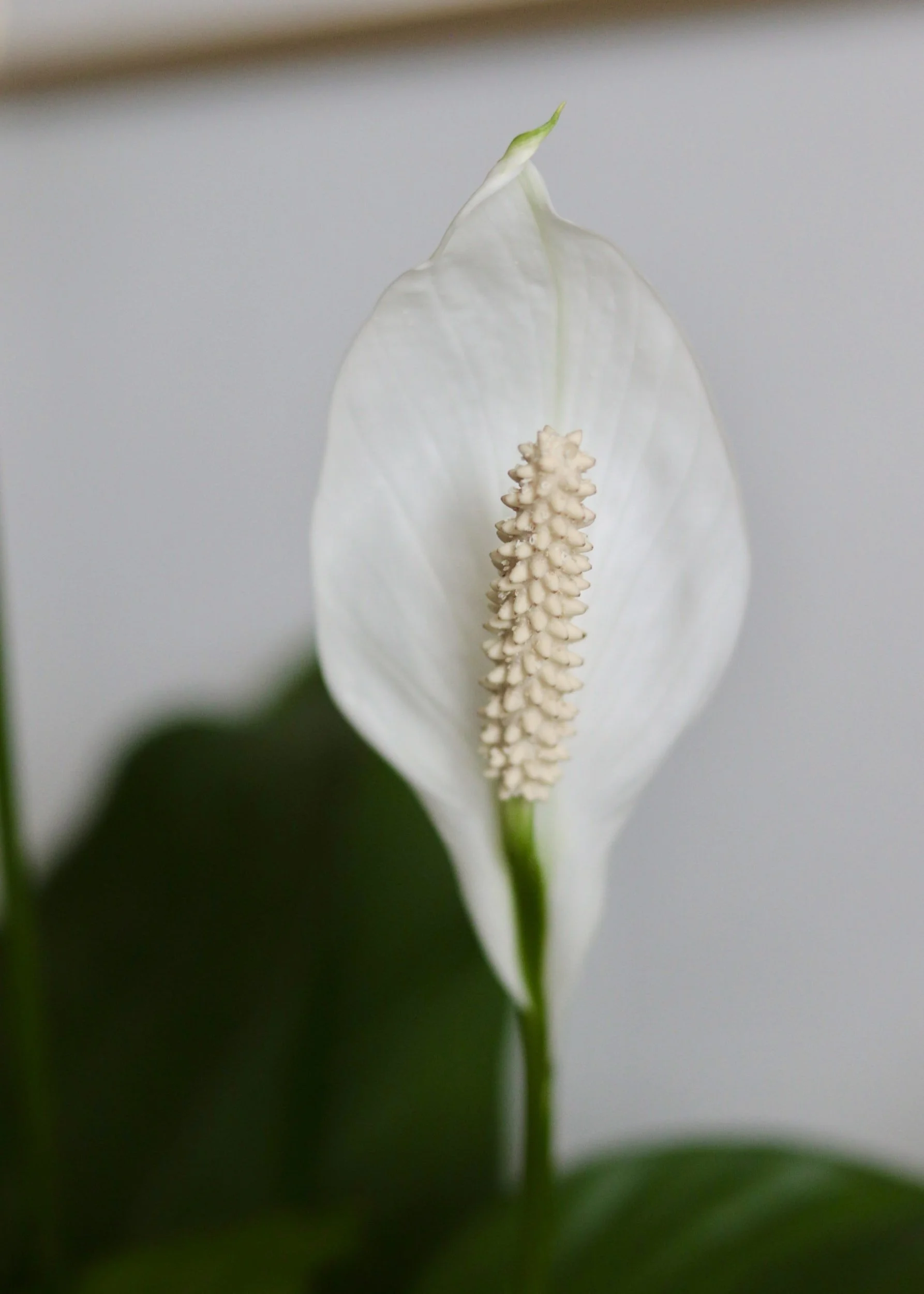
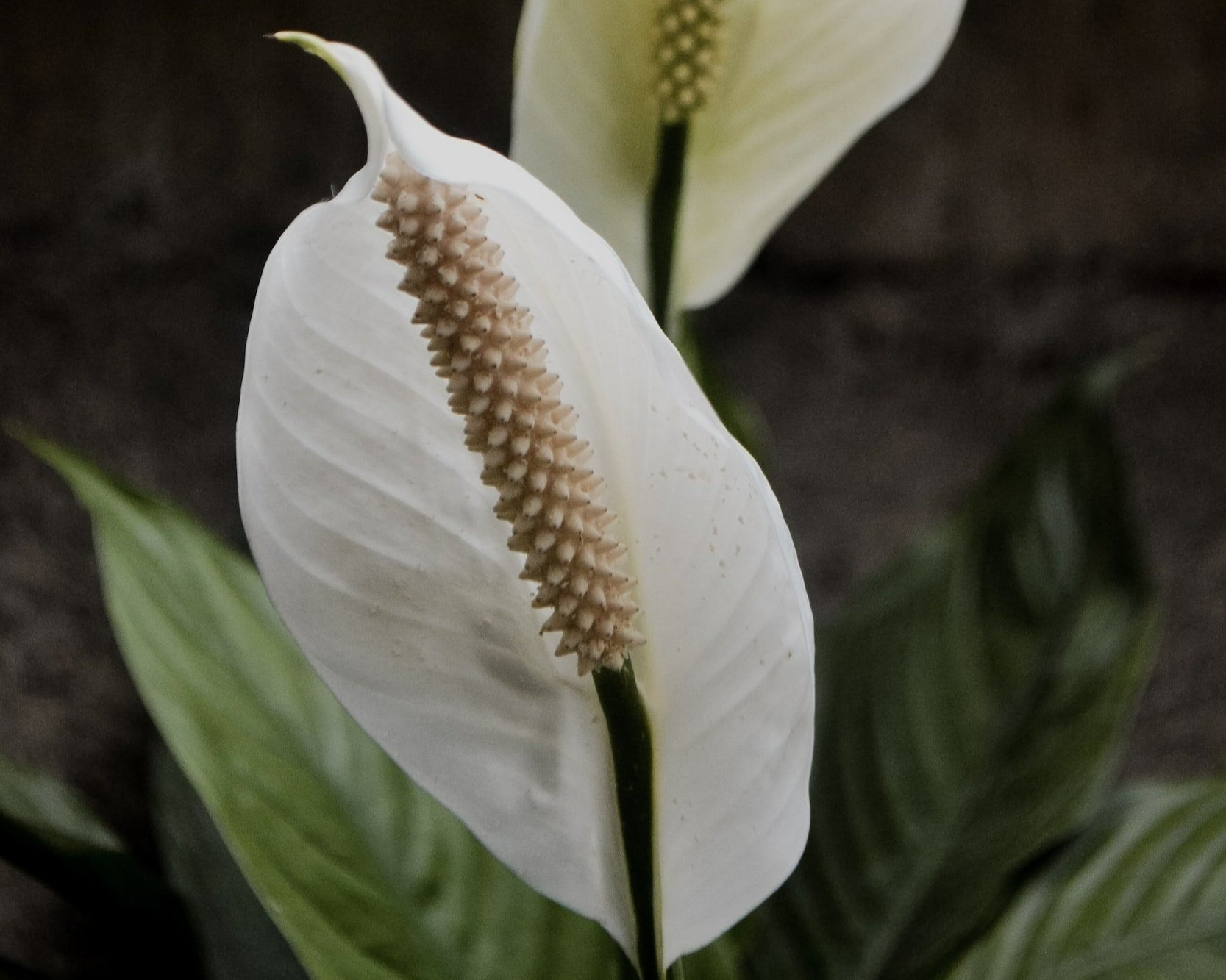
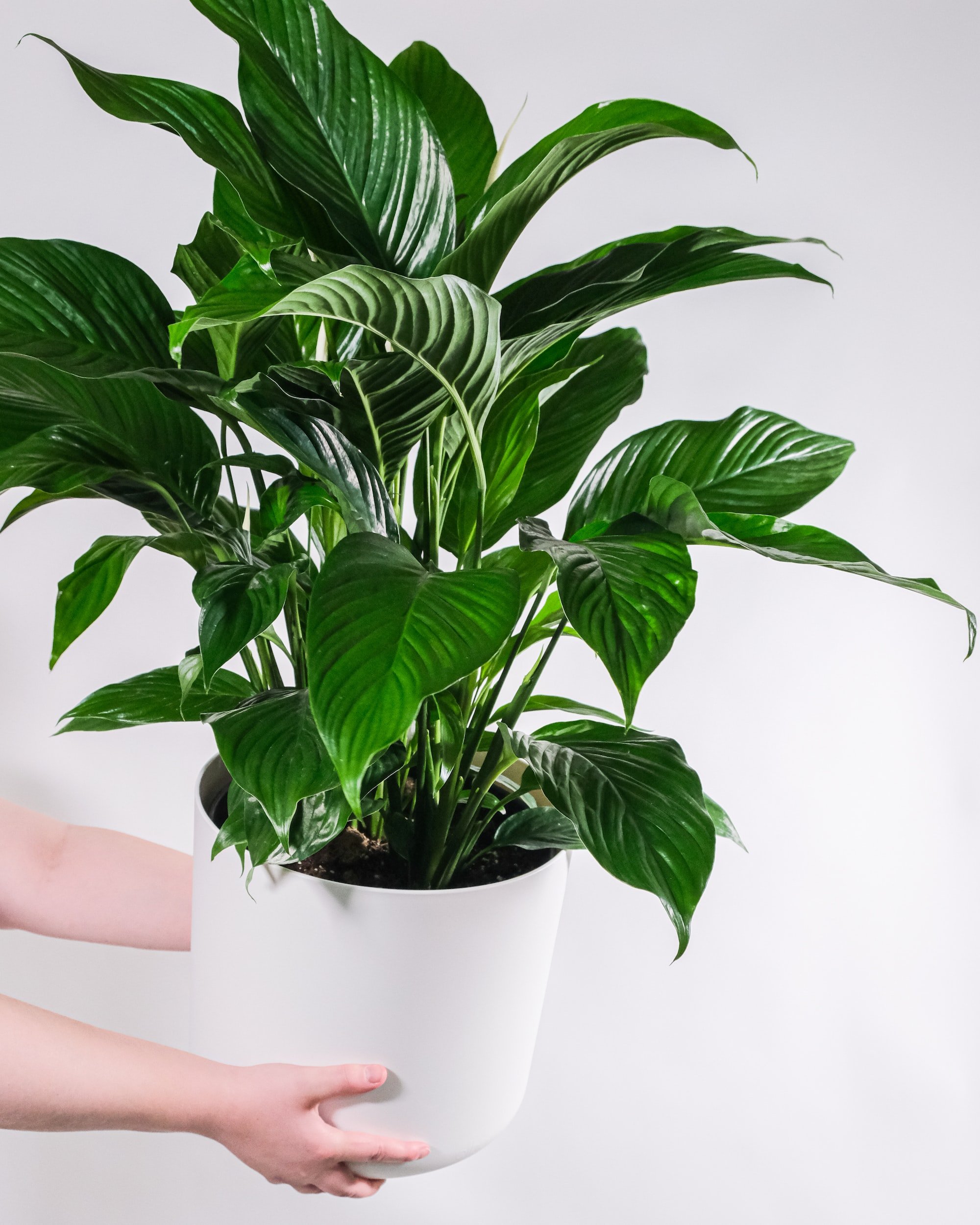
One of those old school houseplants (your Nan definitely had one) that has bounced back. Great as a feature floor plant and a good one for bedrooms because of its air purifying properties. The Peace Lily is native to the tropical rainforests of Central and South America and was brought to Europe during the 1800s. The plant has since become one of the most well loved and popular house plants in the UK. An elegant low-maintenance plant, the Peace Lily blooms in spring with pretty white ‘flowers’ (these flowers are actually leaf bracts that grow hooded over the flowers). The Peace Lily is also one of the best air purifying house plants, breaking down and neutralising gases such as carbon monoxide and formaldehyde.
Top Tips
✔ The Peace Lily will let you know when it’s ready for a drink by its leaves becoming droopy.
✔ Peace Lilies can be sensitive to chemicals so if possible it is best to water the plant using purified water.
Plant Care
-
The Peace Lily can tolerate most light conditions, however the plant will flower best when receiving bright, indirect light.
-
Peace Lilies are more tolerant of under-watering than they are of overwatering. Allow the top soil to dry out between waterings.
-
As they’re originally from the rainforest, Peace Lilies love a humid environment. Make sure to mist the plant every couple of days to help maintain humidity levels.
-
The Peace Lily does not require much feeding. Use a balanced fertiliser once or twice during the summer months, do not feed the plant during the winter.
-
Peace Lilies can tolerate normal room temperatures, just make sure that the plant is kept away from cold drafts and radiators.
-
This plant is toxic if consumed so keep away from children and pets.
-
Propagation by division. Peace Lilies can be divided a number of times, as long as each plant has some foliage attached to the roots they’ll be fine. Once separated simply plant in a new pot that has some room to grow, water and position in a spot with bright, indirect light.
-
Once the Peace Lily has become root bound it’ll need to be repotted. It’s best to repot the plant in the early Spring and plant into a pot that is one size bigger than its current container.



Quick plant check up
Yellow leaves
Older leaves on the Peace Lily will turn yellow, cut these back. Yellow leaves can also be an indication of over watering, make sure to allow the soil to dry out between waterings.
Drooping stems
Your peace lily is thirsty! It should perk up after a good drink
Grow your plant gang

a.k.a. Phlebodium aureum // Hare Foot Fern
Textured, evergreen fern with beautiful silvery blue-green leaves. A Low maintenance, easy to grow houseplant.
NB - Phlebodium ferns have a a natural hairy red/brown root stalk that the fronds grow out of - these are usually visible from the top of the compost, and we would advise watering from the bottom of the pot.
Pot sold seperately

a.k.a. Spathiphyllum
One of those old school houseplants (your Nan definitely had one) that has bounced back. Great as a feature floor plant and a good one for bedrooms because of its air purifying properties.